
Garage Door Cost Guide for Homeowners
Choosing the right garage door for your home is a decision that affects your budget, your energy bills, and your curb appeal for years to come, because the price tag depends on far more than the panel style you see in a showroom. Between material, size, insulation, automation, and the building code your state enforces, two homeowners replacing what looks like the same garage door can end up with quotes that differ by thousands of dollars, which is why answering how much does a garage door cost starts with understanding each cost driver on its own terms rather than trusting a single national average.
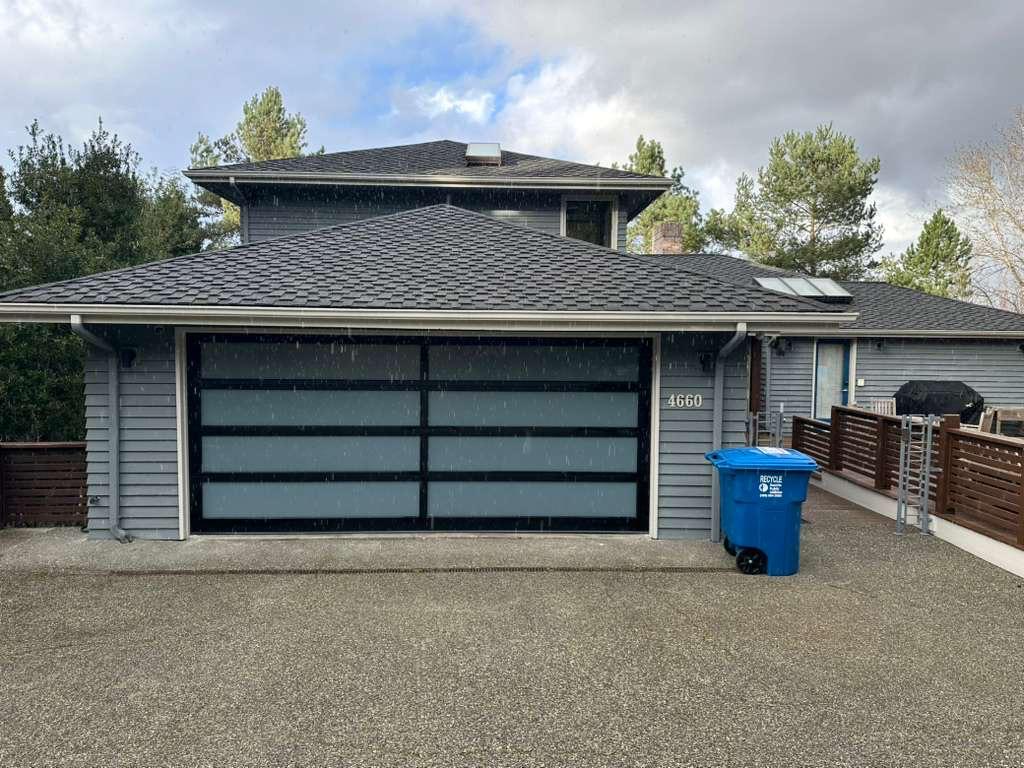
Average Garage Door Cost in 2026
At Skyline Garage Door Repair, most homeowners spend between $500 and $2,500 for a single car garage door replacement, installed, while a two car garage door, a 16×7 insulated model, typically runs $1,100 to $5,000 depending on material and features. Premium, custom, or hurricane-rated installations climb higher, landing in the $2,200 to $8,000+ range, and Florida projects that require wind- and impact-rated assemblies tend to sit toward the upper end of that bracket because of the reinforced construction and third-party testing involved.
| Garage door type | Typical installed cost (USD) |
|---|---|
| Single-car door | $500 – $2,500 |
| Double-car (16×7) insulated door | $1,100 – $5,000 |
| Premium, custom, or hurricane-rated door | $2,200 – $8,000+ |
| Standard repair or diagnostic service call | $150 – $400 |
These garage door prices already include standard installation labor, but the final number shifts once you factor in the size of the opening, the material you choose, and whether local code requires extra reinforcement. Anyone comparing insulated garage door cost against a basic uninsulated panel should expect to pay a few hundred dollars more upfront, though the difference is usually recovered over several winters through lower heating bills. In short, how much is a new garage door depends less on a single sticker price and more on the combination of size, material, and features covered in the sections below.
Standard Garage Door Sizes and How They Affect Price
Size is one of the first variables that determines the cost of a garage door, because a wider or taller opening requires more steel, more insulation core, and more labor to hang correctly. Homeowners researching garage door sizes quickly discover that there is no single universal measurement, since standard garage door sizes vary by vehicle count, garage layout, and the age of the home.
A standard single-car garage door measures 8 or 9 feet wide by 7 feet tall, while a standard double-car garage door measures 16 feet wide by 7 feet tall; some newer homes with taller vehicles or higher ceilings use an 8-foot height instead. The table below works as a simple garage door size chart for the most common configurations.
| Garage door category | Standard width | Standard height |
|---|---|---|
| Single-car (compact) | 8 ft | 7 ft |
| Single-car (standard) | 9 ft | 7 ft |
| Double-car (2-car) | 16 ft | 7 ft |
| Double-car (tall) | 16 ft | 8 ft |
| Oversized/RV or commercial | 10–20 ft+ | 8–14 ft+ |
Understanding garage door dimensions matters just as much for a remodel as it does for new construction, since standard garage door height and standard garage door width figures determine whether an existing frame can accept a standard panel or needs custom hardware. If you are wondering how wide is a garage door on your own property, measure the framed opening rather than the door slab, and if you are checking how tall is a garage door that will clear a raised vehicle or storage rack, add a few inches of buffer above the manufacturer’s listed height.
A double garage door size of 16×7 remains the most common configuration among Skyline’s Washington and Florida customers, while a single car garage door size of 8×7 or 9×7 covers most detached garages and starter homes. Homes with two separate bays instead of one wide opening should measure 2 car garage door dimensions for each bay individually, since older construction sometimes mixes a narrower single door with a wider companion door rather than two identical panels. The average garage door size for new residential construction in both states continues to trend toward the wider 9-foot single and 16-foot double configurations, largely because modern trucks and SUVs need more side clearance than the vehicles these dimensions were originally designed around.
Homeowners with an older house should measure the rough opening before requesting quotes, since homes built decades ago in both Washington and Florida sometimes use widths that fall outside today’s standard sizing. Three measurements matter most when checking whether a garage door will fit without custom hardware: the width and height of the framed opening itself, the side room available for the tracks, and the headroom above the opening needed for the springs and rollers. A garage door built to a non-standard width or height generally adds 20% to 40% to the base material cost, since manufacturers charge a premium for cutting panels outside their standard production runs.
Staying within a standard 8×7, 9×7, or 16×7 size keeps a project inside the lower end of the pricing ranges listed earlier, while any custom dimension — whether from an unusual opening or a taller vehicle — deserves a meaningful line item in the budget rather than an afterthought.
What Determines the Final Cost of a Garage Door
No single number answers how much a garage door costs accurately, because the final invoice is the sum of several variables that a homeowner controls to different degrees:
- Material — steel, aluminum, wood, composite, and fiberglass carry different base prices and different long-term maintenance needs.
- Size — wider and taller openings require more raw material, heavier springs, and often a second technician on installation day.
- Insulation — a polyurethane or polystyrene core costs more upfront but reduces heating and cooling loss.
- Style and design — raised-panel, carriage-house, and full-view glass designs cost more than a flat, unadorned steel slab.
- Automation — adding or upgrading a garage door opener is priced separately from the door itself.
- Labor and installation complexity — a straightforward swap into an existing frame costs less than a project that also resizes the opening or replaces tracks and hardware.
- Local code compliance — Washington’s energy code and Florida’s wind-load requirements each add testing or glazing requirements that a generic national price guide will not reflect.
- Customization — custom colors, decorative hardware, and non-standard window inserts add both material and labor time.
These factors compound rather than operate independently, so the cost of new garage door hardware with premium automation in a Miami-Dade wind zone will always run higher than a standard steel panel with basic automation in a Tacoma suburb, even though both are technically similar products. Underestimating even one of these variables is the most common reason a homeowner’s mental budget falls short of the actual contractor quote.
Garage Door Cost by Material
The material of a garage door shapes not only the upfront price but also how well it tolerates rain, humidity, salt air, or intense sun over a 15- to 30-year service life.
| Material | Typical price range (door only, before labor) | Best suited for |
|---|---|---|
| Steel (insulated) | $400 – $3,000 | Most WA and FL climates; durable and low-maintenance |
| Aluminum | $300 – $2,200 | Coastal Florida properties needing rust resistance |
| Wood | $1,200 – $6,000 | Homeowners prioritizing curb appeal over low upkeep |
| Composite/faux wood | $500 – $4,500 | Wood aesthetics with less maintenance in wet climates |
| Fiberglass | $600 – $3,500 | Humid or salty coastal air where steel might corrode |
Steel remains the most common choice for garage doors in both states because it balances affordability with strength; an insulated steel door with a foam core holds up well against Washington’s near-constant rain while also resisting the dents that storm debris can cause in Florida. The trade-off is that a lower-gauge steel panel can dent under enough force, and an uninsulated steel door performs poorly against Pacific Northwest cold. Aluminum garage doors are lighter, which suits larger openings and coastal Florida homes where rust resistance outweighs raw strength, though that same light weight means aluminum dents more easily and typically carries a lower wind-load rating unless reinforced.
Wood garage doors deliver a warm, custom appearance that steel and aluminum cannot fully replicate, but they demand the most upkeep of any material on this list — expect to refinish or reseal a wood door every 3 to 5 years in Washington’s wet climate to prevent warping, and slightly less often in Florida provided the door is shaded from prolonged direct sun. Composite and fiberglass doors split the difference by mimicking the look of wood or offering a smooth, paintable surface without the rot risk, which is why many of our Florida customers in humid coastal zones choose fiberglass over solid wood for similar curb appeal with less long-term maintenance.
Steel is the default recommendation for most Skyline customers because of its cost-to-durability ratio, but homeowners near Florida’s coastline or in Washington’s rainiest counties should weigh the garage door price difference between aluminum or fiberglass against steel’s slightly higher long-term upkeep before deciding.
Garage Door Opener Costs by Brand
An automated opener is a separate purchase from the garage door itself, and the brand you choose affects both the upfront cost and how the system performs over a decade of daily use.
| Brand | Drive type | Price range (unit + installation) | Notable features |
|---|---|---|---|
| Genie | Chain-drive | $150 – $300 | Reliable, budget-friendly, best for detached garages |
| Chamberlain | Belt-drive | $200 – $400 | Smart-home compatible, quieter than chain-drive |
| LiftMaster | Belt-drive or jackshaft | $400 – $700 | myQ smart connectivity, quiet operation, premium tier |
Genie openers appeal to budget-conscious homeowners who want dependable chain-drive operation without smart-home features, though the mechanical noise from a chain drive is noticeable in garages that sit directly below a bedroom. Chamberlain, which shares a parent company with LiftMaster, sits in the mid-tier and pairs smart-home compatibility with quieter belt-drive operation, making it a sensible upgrade for attached garages. LiftMaster commands the highest garage door opener installation cost because of its myQ connectivity, near-silent belt or jackshaft drive, and battery backup options that keep a garage door operational during a power outage — a feature that carries extra weight in Florida, where hurricane-season outages are common.
The cost to install garage door opener hardware is usually bundled into the ranges above, but homeowners replacing an opener alongside a full garage door replacement often save $50 to $100 by scheduling both jobs in a single visit rather than two separate service calls.
Installation Labor, Permits, and Project Timelines
Labor is frequently the most underestimated line item in a garage door budget, since homeowners tend to focus on the door itself and overlook that removal of the old unit, hardware alignment, and safety testing all take skilled time. When quoted separately from the door and opener, garage door installation cost for a standard single-door replacement runs $150 to $300, and our licensed technicians typically complete that work within a 2- to 4-hour service window, assuming the existing opening, tracks, and framing are in good condition.
Permits are generally not required for a like-for-like garage door replacement in most Washington and Florida jurisdictions, since swapping one door for another of the same size is treated as routine maintenance rather than a structural change. A permit — usually costing $75 to $250 — becomes necessary in two common situations: when the size of the opening changes, or when a Florida property in a Wind-Borne Debris Region needs the inspector to verify that the new assembly carries the required wind- or impact-rated approval. Skipping a required permit can create problems later, particularly in a Florida coastal county, where an unpermitted garage door replacement may complicate a future home sale or insurance claim.
Washington State: Climate, Code, and Cost Considerations
Homeowners in Bellevue, Seattle, and across Washington State face a different set of cost drivers than the rest of the country, because the primary risk to a garage door here is sustained moisture rather than wind or impact. The Washington State Energy Code (WSEC) sets U-factor requirements for any garage door that includes glazing:
- Doors with less than 14% glazing need a U-factor of 0.31 or better.
- Doors with 14% to 50% glazing need a U-factor of 0.34 or better.
Meeting these thresholds requires documentation confirming the door’s thermal performance before installation in new construction or a qualifying remodel, so it is worth confirming this paperwork with your supplier rather than assuming any glazed door will pass inspection. Beyond code compliance, moisture resistance should weigh heavily into the material decision for Washington homeowners, since the state’s near-constant rain and humidity accelerate rust on unprotected steel hardware and can warp untreated wood panels within a few seasons. Insulated steel or fiberglass garage doors, paired with corrosion-resistant hardware, tend to outperform bare wood or standard aluminum in this climate, and the added insulation value also reduces heat loss during the long, wet winters typical of the Puget Sound region.
Florida State: Hurricane Codes and Cost Considerations
Florida presents a nearly opposite challenge, where heat, humidity, and hurricane-season timing dominate the decision rather than moisture alone. The Florida Building Code Section 609.4 sets strict wind-load and impact-resistance rules that directly affect the price of a garage door in the following ways:
- Homes in a Wind-Borne Debris Region, and especially High-Velocity Hurricane Zones such as Miami-Dade and Broward counties, must install a door carrying a Florida Product Approval or a Miami-Dade Notice of Acceptance (NOA).
- That approval requires the door to pass large-missile impact testing, which involves firing a 9-pound piece of 2×4 lumber at the assembly at 50 feet per second to simulate hurricane debris.
- The reinforced steel gauge, heavier bracing, and third-party certification behind that testing are exactly why hurricane-rated doors sit near the top of the $2,200 to $8,000+ pricing bracket rather than the lower end.
Homeowners in Orlando or inland Tampa suburbs outside the most severe wind zones may qualify for less stringent — and less expensive — wind-rated options, so it is worth confirming your property’s exact wind zone designation before assuming you need the highest-tier hurricane rating. If your property sits in a Wind-Borne Debris Region or High-Velocity Hurricane Zone, plan for a certified, impact-tested garage door near the top of the pricing range rather than the average.
Repair or Replace: Which Costs Less?
A standard repair or diagnostic service call runs $150 to $400, which makes repair the obvious choice for isolated issues like a broken spring, a misaligned track, or a malfunctioning sensor. Replacement becomes the more cost-effective path once a garage door shows multiple problems at once, since paying for several individual repairs within the same year frequently exceeds the average cost of garage door replacement for a new single-car unit. Consider replacement rather than repeated repair when you notice any of the following:
- The door is more than 15 years old and needs a service call more than once a year.
- Panels are visibly warped, rusted through, or dented in multiple sections.
- The insulation has degraded to the point where the garage no longer holds temperature.
- Replacement parts for the specific model are becoming difficult to source.
- The door no longer meets current wind or energy code, which matters if you are preparing to sell in a Florida coastal county or a Washington jurisdiction enforcing updated WSEC standards.
A garage door with a single malfunctioning component and no structural damage is almost always cheaper to repair, while a door showing several of the signs above is usually cheaper to replace once the cumulative cost of ongoing service calls is factored in.
DIY vs. Professional Garage Door Installation
Garage door installation looks manageable from online tutorials, but the torsion springs that counterbalance the door store enough tension to cause serious injury if released incorrectly, which is the main reason most manufacturers and insurers recommend professional installation. A homeowner attempting a DIY install also risks misaligning the tracks or sensors, which can cause the door to reverse unexpectedly or fail a basic safety inspection.
Hiring a licensed and insured technician removes that risk and typically guarantees the work against defects, while Skyline Garage Door Repair’s 24/7 availability means a botched or incomplete DIY installation can be corrected quickly rather than leaving a home insecure overnight. The trade-off is straightforward: DIY installation saves on labor cost but transfers all injury and warranty risk to the homeowner, while professional installation adds the $150 to $300 labor cost but removes that risk entirely. For anything beyond minor cosmetic touch-ups, the labor savings from a DIY approach rarely outweigh the risk that comes with handling a spring-loaded garage door.
How to Save Money on a New Garage Door
Most of the savings on a garage door project come from decisions made before the order is placed rather than from negotiating after a custom door has already been built. A few adjustments tend to make the biggest difference:
- Stick to standard sizes — an 8×7, 9×7, or 16×7 door avoids the 20% to 40% custom-sizing premium.
- Bundle the door and opener installation into a single visit to save on a second service call.
- Choose insulated steel over premium wood to get most of the energy-efficiency benefit at a fraction of the material and maintenance cost.
- Time the purchase outside peak season — late fall and winter in Florida, or late summer in Washington, tend to see less installer demand than spring.
- Maintain the garage door regularly, since lubricating moving parts and testing balance annually extends the life of springs, rollers, and openers and delays the next full replacement.
- Confirm your exact Florida wind-zone requirement before ordering, so you avoid paying for a certification tier your property does not actually need.
Frequently Asked Questions
How much does a new garage door cost installed?
Most homeowners pay $500 to $2,500 for a single-car door measuring roughly 8×7 or 9×7, and $1,100 to $5,000 for a double-car door, with premium or hurricane-rated installations reaching $2,200 to $8,000 or more.
Do I need a permit to replace my garage door?
Generally no, if you are replacing a door with one of the same size in Washington or Florida. A permit, typically $75 to $250, becomes necessary if the opening size changes or if your Florida property requires wind/impact-rated certification.
How much more does a hurricane-rated garage door cost in Florida?
Hurricane-rated doors typically fall in the $2,200 to $8,000+ range because of the reinforced steel, bracing, and Florida Product Approval or Miami-Dade NOA testing required in Wind-Borne Debris Regions.
Which garage door opener brand should I choose?
Genie ($150-$300) suits budget-conscious buyers, Chamberlain ($200-$400) offers smart-home features at a mid-range price, and LiftMaster ($400-$700) delivers the quietest operation and battery backup for storm-prone areas.
Is it cheaper to repair or replace an old garage door?
Repair, at $150 to $400 per service call, is cheaper for isolated issues, but replacement becomes more economical once a door is over 15 years old and needs repeated service calls in the same year.
Does homeowners insurance cover garage door damage?
Coverage varies by policy, but most insurers cover damage from storms or vandalism rather than routine wear, which is another reason Florida homeowners in wind zones should confirm their garage door meets current impact standards.
Final Thoughts
Garage door pricing ultimately comes down to size, material, insulation, and automation, with Washington’s WSEC energy standards and Florida’s hurricane-zone testing requirements each pulling costs in different directions for very different climate reasons.
If you are ready to upgrade or repair your garage door, Skyline Garage Door Repair’s Washington and Florida teams will recommend a door and opener built for your local climate and code requirements, so schedule your free in-home garage door consultation today or call Skyline Garage Door Repair for a free estimate.