Can You Paint Garage Doors? A Complete Guide for Homeowners
A garage door often makes up close to a third of a home’s visible street-facing exterior, which is why a tired, faded, or mismatched door can undercut an otherwise well-maintained property. Homeowners frequently ask can you paint a garage door without voiding a manufacturer warranty or damaging the finish, and the honest answer depends more on material, condition, and climate than on brand loyalty. Garage door paint is one of the most cost-effective ways to update curb appeal, but the process involves more variables than most homeowners expect, from door material and existing coatings to regional climate conditions in places like Bellevue or Tampa, and getting any one of those variables wrong can shorten the life of the finish considerably. This guide walks through when painting a garage door makes sense, which materials and preparation steps matter most, and when calling in a professional is the smarter choice.
Can You Paint Your Garage Door: The Short Answer
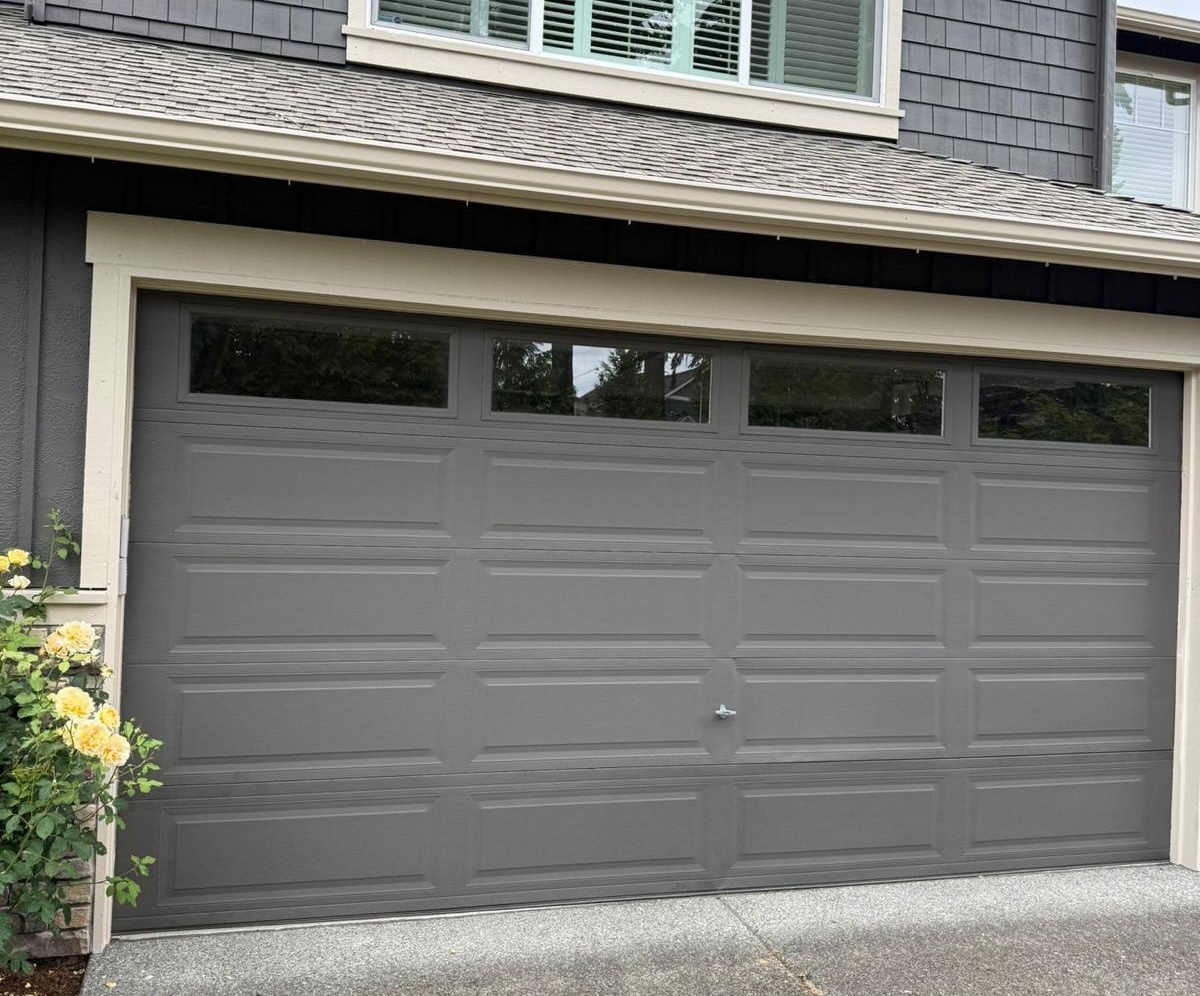
Can garage doors be painted? Yes, and doing so is one of the more reliable ways to refresh curb appeal without the cost of a full replacement. Whether the project holds up over time depends less on enthusiasm and more on three factors: the door’s current physical condition, the material it is built from, and the paint product selected for that specific material.
A steel door in solid structural shape with no active rust can typically be repainted in a single weekend, while a door with extensive corrosion, warping, or broken panels is a poor painting candidate because the finish will only draw attention to the underlying damage. At Skyline Garage Door Repair, we generally recommend painting when a garage door is under 15 years old and mechanically sound, and recommend evaluating replacement once repair costs approach 40-50% of what a new unit would cost.
Garage door paint works well as a maintenance and cosmetic strategy for a door in good working order, but it will not resolve structural damage, and a door that has reached the end of its service life needs replacement rather than a fresh coat.
Factors to Weigh Before You Start Painting
Four separate variables interact with each other and largely determine whether a paint garage door project lasts one season or a full decade.
Door Condition and When Not to Paint
Before opening a paint can, inspect the door for:
- Dents or gouges, which can usually be filled with an exterior-rated auto-body filler and sanded flush
- Active rust, which needs to be ground down to bare metal rather than painted over, since trapped moisture underneath a fresh coat accelerates corrosion
- Hairline cracks in fiberglass panels or delamination on wood doors
- Structural warping, broken hinges, or panel separation, none of which paint can correct
If the inspection turns up structural issues rather than cosmetic ones, a licensed technician should evaluate whether a panel replacement or full door replacement is more cost-effective than repainting.
Material Determines the Entire Approach
Steel and aluminum garage doors require a rust-inhibitive primer before any topcoat, and aluminum garage door paint in particular needs to stay flexible enough to move with the metal without cracking at the seams. Wood doors need a breathable exterior primer that lets moisture escape rather than blister the finish. Homeowners sometimes ask can you paint vinyl garage doors, and the answer is yes, provided the product is formulated specifically for flexible PVC, since standard acrylic paint can crack as vinyl expands and contracts with temperature. Fiberglass doors need a bonding primer because the surface is naturally slick and resists adhesion on its own. Using the same product across all four materials is the fastest way to end up with a finish that fails within a year.
Existing Paint and Coating Condition
A door that has been painted before needs an adhesion check first. Peeling, flaking, or chalking paint has to be scraped and sanded away, and glossy factory finishes should be scuff-sanded with 150-220 grit sandpaper so the new primer has something to grip. Skipping this step is the single most common reason DIY painted garage doors fail within the first year, because new paint applied over a poorly bonded old layer peels along with it.
Climate: Why Different Regions Call for Different Approaches
Regional climate affects paint performance more than most homeowners expect, and Washington and Florida sit at opposite ends of the relevant spectrum. Around Seattle and Bellevue, sustained rainfall and cooler application temperatures mean paint needs a reliable dry window between weather systems, and a moisture-resistant primer helps keep mildew from developing behind the topcoat on doors that face prevailing weather. Around Miami, Tampa, and Orlando, intense UV exposure and high humidity accelerate fading and can extend tack-free times during peak summer heat, which is why scheduling the project for early morning hours during the drier months tends to produce a more even finish.
Skipping any one of these four checks, condition, material compatibility, existing coating prep, or climate timing, tends to shorten the paint job’s lifespan no matter how carefully the actual painting is done.
Manufacturer Warranty Risk and Thermal Bowing
Few homeowners consider this before deciding to repaint garage door surfaces, yet it carries real financial consequences. Most garage door manufacturers, including major insulated steel door lines, state explicitly that non-factory paint jobs void the paint finish warranty, and some warranties are voided entirely when a door is repainted in a color noticeably darker than the original factory finish.
The mechanism behind that policy is called thermal bowing. Insulated steel garage doors with a bonded foam core can flex outward at the center when the exterior skin heats up faster than the interior skin, which typically happens when a fully closed, air-conditioned garage creates a large temperature gap between the two surfaces. Darker colors absorb more solar radiation and heat up faster, increasing both the likelihood and severity of bowing, while white garage door paint and other light, high-reflectance shades stay noticeably cooler under direct sun. Manufacturers commonly reference Light Reflective Value (LRV) as a guideline: paint colors with an LRV below roughly 30, such as deep charcoal, navy, or black, carry a higher risk of bowing on insulated steel doors, while colors above 55 LRV are generally considered safe to repaint without voiding coverage.
This risk shows up far more often in Florida, where prolonged sun exposure combined with air-conditioned garages creates exactly the temperature differential that drives bowing, than in Washington, where cooler and cloudier conditions make the phenomenon uncommon. Homeowners planning a dark repaint in South Florida should either choose a lighter shade or check the door manufacturer’s technical specifications first, since a bowed door can bind against its tracks and shorten the life of the opener motor.
Repainting is generally safe from a warranty standpoint when the new color’s LRV is similar to or higher than the factory finish. A significantly darker color, especially on an insulated steel door in a hot climate, is where the aesthetic preference needs to be weighed against real mechanical and warranty risk.
HOA and Community Color Requirements
Homeowners associations frequently regulate exterior paint colors, and garage doors are almost always included in that oversight because they occupy such a large share of the front elevation. Many Florida HOA architectural review committees require garage door color to either match the home’s siding or fall within a pre-approved palette, and recent Florida legislation addressing hurricane-related exterior modifications reinforced that HOA boards retain authority over color and style approvals even when a door is being replaced for wind compliance reasons. Skipping this review can mean repainting a freshly finished door at additional cost and delay.
Washington communities with HOAs apply similar review processes, though restrictions tend to be less rigid than in many Florida developments and enforcement varies by community. In both states, submitting a color sample to the architectural review board before starting the project is far more likely to succeed than requesting approval after the fact.
Treat HOA approval as a required step rather than a formality: the cost of repainting a door that fails review typically exceeds the cost of a five-minute submission beforehand.
Choosing the Right Paint for Your Door’s Material
Matching paint for garage door substrates affects longevity more than brand selection or price point does. The table below outlines the general product category needed for each common garage door material.
| Door Material | Primer Type | Topcoat Type | Typical Coats |
|---|---|---|---|
| Steel/Aluminum | Rust-inhibitive metal primer | 100% acrylic exterior latex | 2 coats |
| Wood | Exterior wood primer (oil or water-based) | Exterior acrylic paint or semi-transparent stain | 1 primer + 2 coats |
| Vinyl | Vinyl-safe bonding primer | Paint formulated for vinyl siding/PVC | 2 coats |
| Fiberglass | Adhesion-promoting bonding primer | Acrylic exterior paint | 2 coats |
A 100% acrylic exterior latex is generally considered the best paint for garage door surfaces made of steel, since it outperforms oil-based paint by staying flexible as the metal expands and contracts with temperature swings, reducing cracking over multiple seasons. Wood doors in Washington’s wetter climate benefit from a paint with mildewcide additives and strong moisture resistance, while Florida homeowners get more value from a UV-resistant formulation that slows chalking under sustained sun exposure. Matching the chemistry to both the material and the regional climate reduces the odds of premature peeling or fading, which pays off over the life of the finish even though it does not change the sticker price of the paint itself.
Step-by-Step Garage Door Painting Process
Once the door has been inspected, matched to the right paint, and cleared with the HOA if applicable, learning how to paint a garage door correctly comes down to a fixed sequence: prep, protect, prime, and coat. Skipping ahead to the topcoat without completing the earlier steps is what causes most premature failures.
Surface Preparation
Wash the garage door with a mild detergent solution or a pressure washer set to a moderate PSI to avoid forcing water behind panel seams, then allow at least 24 hours of dry time before sanding. Scrape peeling paint, sand glossy areas with 150-220 grit sandpaper, treat rust spots on steel doors with a wire brush down to bare metal, and fill dents or gouges with exterior-rated filler before sanding smooth once cured.
Protecting Surrounding Areas
Mask windows, weatherstripping, hardware, and hinges with painter’s tape, and lay drop cloths across the driveway and any nearby landscaping. Removing hardware entirely, when feasible, produces cleaner lines than taping around it, though it adds roughly 30-45 minutes to the prep timeline.
Priming
Apply the material-appropriate primer and allow full cure time per the label, generally 1-4 hours depending on humidity and temperature. Priming bare metal or unfinished wood is not optional: without it, the topcoat has nothing to chemically bond to, and adhesion failure follows within months.
Applying the Topcoat: Brush and Roller vs. Sprayer
| Method | Best For | Pros | Cons |
|---|---|---|---|
| Brush and roller | Panel doors with raised recesses, smaller budgets | Low cost, easy touch-ups, no overspray risk | Slower, visible brush marks if technique is inconsistent |
| Airless sprayer | Flat or lightly textured doors, larger projects | Faster, smoother professional-looking finish | Requires masking a wider area, equipment rental cost, learning curve |
A 2-2.5 inch angled sash brush works well into recessed panel areas, followed by a roller with a 3/8-3/4 inch nap for the flat stiles, maintaining a wet edge throughout to avoid visible lap marks. For flatter, more contemporary door styles, an airless sprayer held roughly 12 inches from the surface with 50% overlap between passes produces a more even finish in less time, though it requires masking a wider radius around the door, including vehicles and landscaping, to control overspray.
Material-Specific Notes
- Steel doors: when painting steel garage door panels, apply two coats of acrylic latex, allowing 4-6 hours between coats depending on humidity.
- Wood doors: after staining, brush with long, even strokes along the grain and finish with a polyurethane sealant for added moisture protection.
- Fiberglass doors: sand lightly with 400-grit paper before priming so the coating adheres to the naturally slick surface.
- Vinyl doors: confirm the paint is explicitly labeled for vinyl use, since standard exterior paint can crack as the material flexes with temperature changes.
Cleanup and Cure Time
Remove painter’s tape before the final coat fully cures to prevent peeling along the tape line, typically 4-8 hours after the last coat depending on product and weather. Let the door cure for 24-48 hours before regular use, since repeated opening and closing during that window can crack a finish that has not fully set.
Cost Comparison: DIY, Professional Painting, or Door Replacement
Painting a standard single-car steel garage door with materials from a home improvement store typically costs $75-$200 in supplies, including primer, paint, brushes or a sprayer rental, and masking materials, plus a full weekend of labor. Hiring a professional painting crew for the same project generally runs $300-$600 depending on door size and condition.
Replacing the door entirely, rather than painted garage doors that are aging or damaged, costs more upfront but resolves both cosmetic and structural issues at once: $500-$2,500 for a single-car door and $1,100-$5,000 for a double-car insulated door, while premium or hurricane-rated doors built for Florida’s Wind-Borne Debris Regions trend toward $2,200-$8,000 or more given the impact-resistant glazing and reinforced framing required under Florida Building Code Section 609.4.
| Option | Typical Cost Range | Best When |
|---|---|---|
| DIY painting | $75-$200 (materials only) | Door is structurally sound, homeowner has a free weekend |
| Professional painting | $300-$600 | Time-constrained homeowners, complex door styles |
| Door replacement | $500-$2,500 (single) / $1,100-$5,000 (double) | Door is over 15-20 years old or has structural damage |
A standard diagnostic or repair service call, useful before deciding whether a door’s mechanical issues need addressing before any paint goes on, typically runs $150-$400. Weighing these figures against the garage door’s age and condition helps determine whether painting is worth the investment or whether that budget is better redirected toward a new door with better insulation value and, in Florida, wind resistance.
Maintenance and Repainting Frequency
A properly prepped and painted garage door typically lasts 5-10 years before it needs another coat, though the exact timeline depends heavily on regional exposure. Sustained rain and humidity in Washington can promote mildew on the lower panels of doors facing prevailing weather, so an annual rinse and a visual check for early spotting extends the interval between repaints. Intense Florida sun tends to cause chalking and color fading well before the paint film itself fails structurally, which is why homeowners there sometimes notice a dulled finish around the five-year mark even though the coating is still technically intact.
Rinsing the door every few months, to remove salt air residue near the Florida coast or pollen and organic debris in wetter Washington neighborhoods, extends the finish’s life in both regions. Addressing chalking, hairline cracks, or peeling at panel seams as soon as they appear is considerably cheaper than waiting for a full repaint, since spot touch-ups cost a fraction of a complete recoat.
Frequently Asked Questions
How often should I repaint my garage door?
Most garage doors need repainting every 5-10 years, with Florida doors trending toward the shorter end of that range due to UV exposure and Washington doors sometimes lasting closer to 10 years given lower sun intensity.
Can I paint my garage door a completely different color?
Homeowners who ask can I paint my garage door a new shade will find the answer is yes, provided the old finish is properly removed or sanded and the new color is checked against the door’s LRV guidelines to avoid thermal bowing risk on insulated steel doors, as well as against any HOA color requirements in your community.
Do I need to remove the garage door windows before painting?
Removing window inserts is optional. Taping carefully around the frame and glass produces a comparably clean result for most homeowners without the extra disassembly step.
Can I use a paint sprayer on my garage door?
Yes. An airless sprayer works well on flatter door styles and produces a smoother finish faster than brushing, though it requires more extensive masking of the surrounding driveway, landscaping, and vehicles to prevent overspray.
Does painting affect my garage door’s warranty?
It can. Non-factory paint jobs frequently void the manufacturer’s finish warranty, and choosing a significantly darker color than the original can also void coverage related to thermal bowing on insulated steel doors.
Can you paint a metal garage door the same way as a wood one?
No. Anyone wondering can you paint a metal garage door using wood-oriented products should avoid that combination, since steel and aluminum need rust-inhibitive primers and flexible acrylic topcoats that wood-specific products are not formulated to provide.
Final Thoughts
Painting a garage door remains one of the more affordable ways to refresh a home’s exterior, provided the primer and paint match the door’s material, the color respects manufacturer guidelines around warranty coverage and thermal bowing, and the timing accounts for Washington’s moisture or Florida’s heat and UV exposure. On a structurally sound door, a properly executed paint job can look professional and hold up for a full decade with modest maintenance in between.
If your garage door shows damage that painting cannot fix, or you would rather skip the preparation and masking involved in a DIY project, Skyline Garage Door Repair’s Washington and Florida teams can evaluate your door’s condition and recommend whether a professional paint job, a panel repair, or a full replacement built for your local climate and code requirements makes the most sense. Call Skyline Garage Door Repair for a free estimate or schedule your free in-home garage door consultation today.